Efficacy of PHOSPHO-jet Against Beech Leaf Disease
Study Overview
Beech Leaf Disease (BLD) is caused by the foliar nematode, Litylenchus crenatae mccannii. This disease is rapidly spreading across the northeastern U.S. and Canada, leading to canopy decline and tree mortality of American and European beech.
Field trials were conducted from 2024–2025 in naturally infested beech stands in Massachusetts and New York to evaluate trunk-injected systemic treatments. Trees were treated with potassium phosphite (PHOSPHO-jet™), or left untreated. Canopy condition and nematode populations were assessed prior to treatment and one year post-treatment.
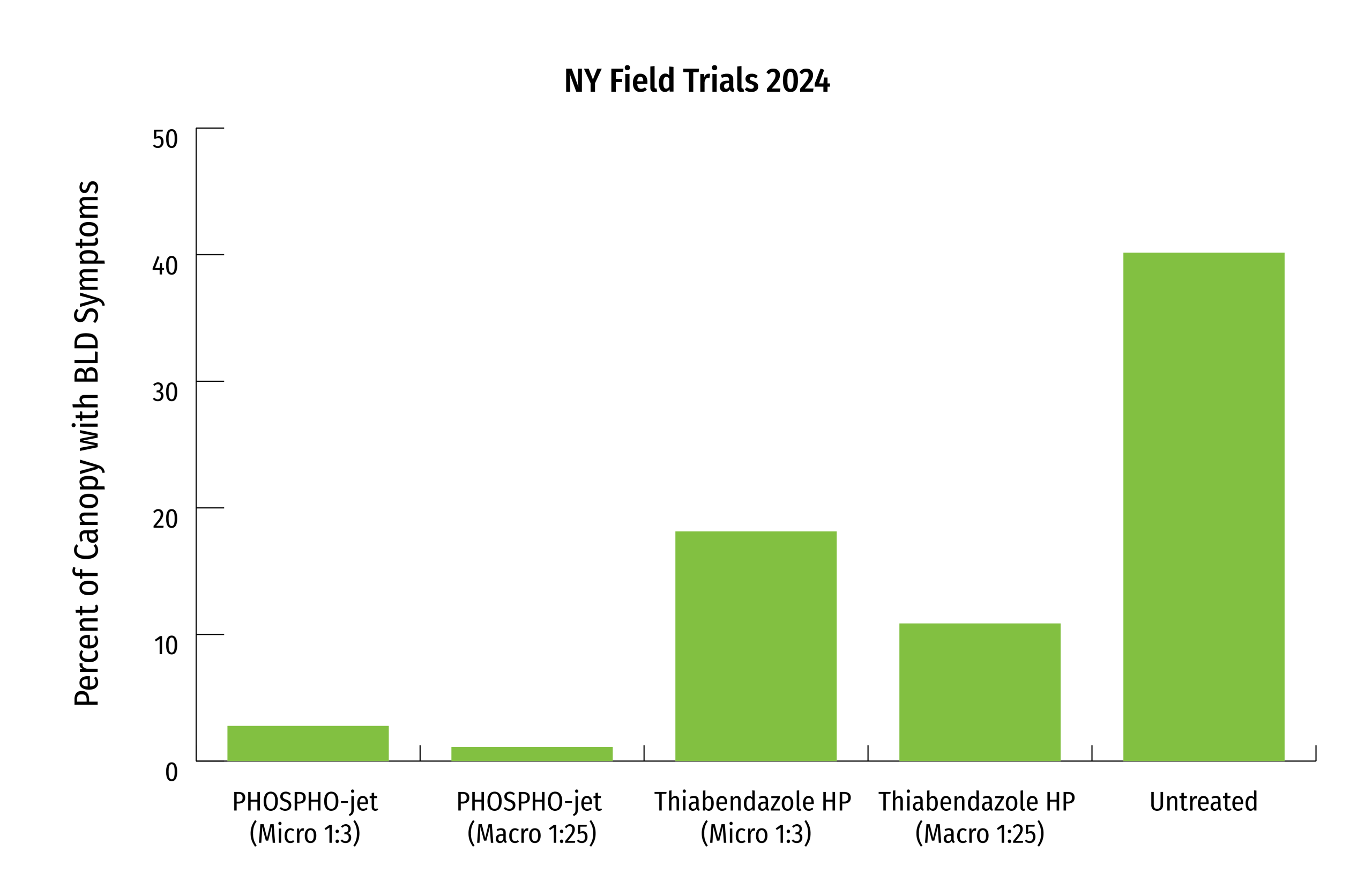
Additional supporting trials in New York and Maryland compared different dilution rates of PHOSPHO-jet™ injections to the standard thiabendazole hypophosphite injection, as well as soil-applied granular phosphite treatments. Nematode counts from buds were measured up to 16 months after treatment.
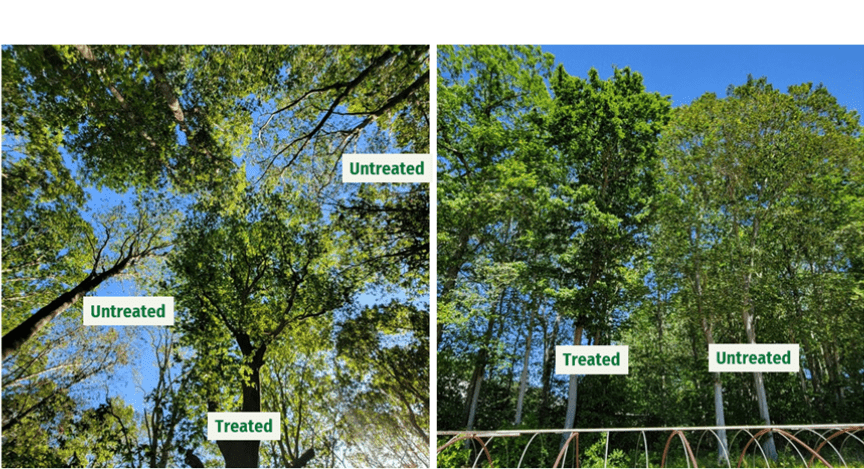
Canopy Health of Treated versus Untreated in Long Island NY
Results
Canopy Health
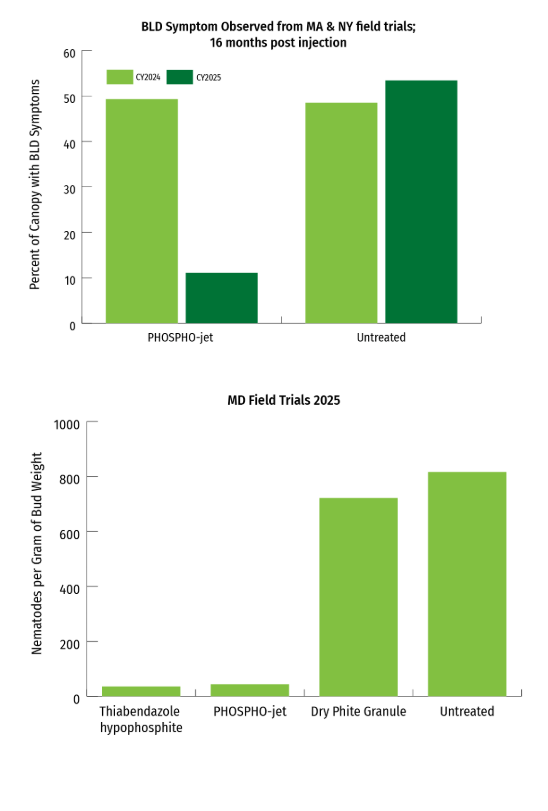
Trees treated with PHOSPHO-jet™ showed dramatic reductions in BLD symptoms across all sites.
• Lexington, MA: 38% canopy with symptoms → 1.5% symptomatic canopy
• Jamesport, NY: 59% canopy with symptoms→ 8% symptomatic canopy
Bud sampling showed near-zero nematode counts in PHOSPHO-jet™-treated trees, while untreated trees maintained significantly higher populations.
Consistency Across Methods
Efficacy was consistent across:
• Multiple geographic locations
• Different dilution rates (no loss of performance when diluted)
• Both micro-injection and macro-injection methods
Comparative Treatment Performance
Effective:
• PHOSPHO-jet™ (potassium phosphite)
• Thiabendazole hypophosphite
Ineffective or Inconsistent:
• Soil-applied phosphite treatments
Conclusion
Featured Product
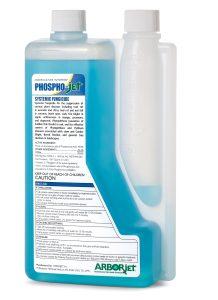
PHOSPHO-jet™ is a systemic fungicide that delivers powerful disease suppression while activating a plant’s natural defense systems. Ideal for spring or fall applications, it combines proven phosphorous-based chemistry with plant health benefits for enhanced vitality.
Formulated for rapid uptake and efficient translocation, PHOSPHO-jet™ provides broad-spectrum protection against damaging pathogens. Its unique mode of action also strengthens cell walls and promotes vigorous root, stem, and leaf growth—helping trees thrive season after season.